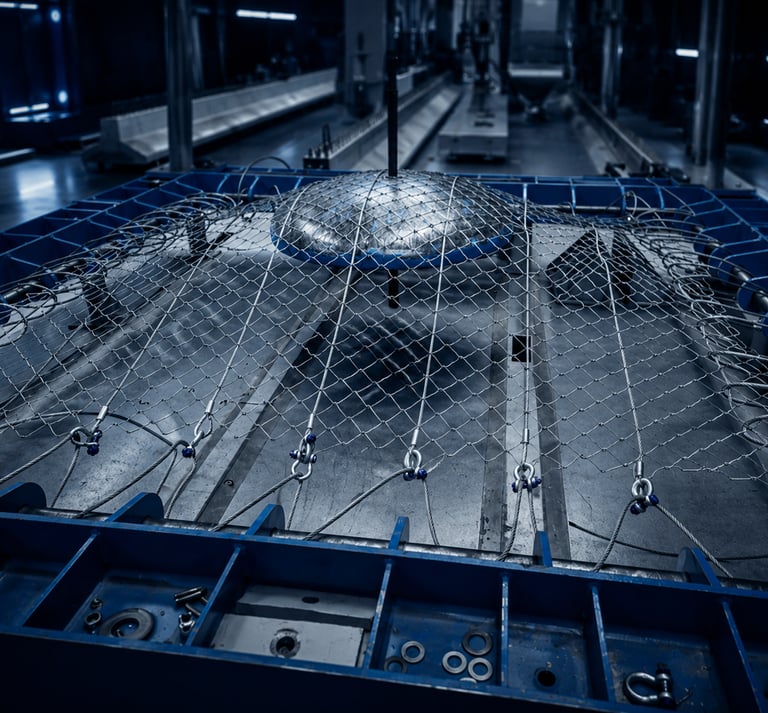
Engineering protection system
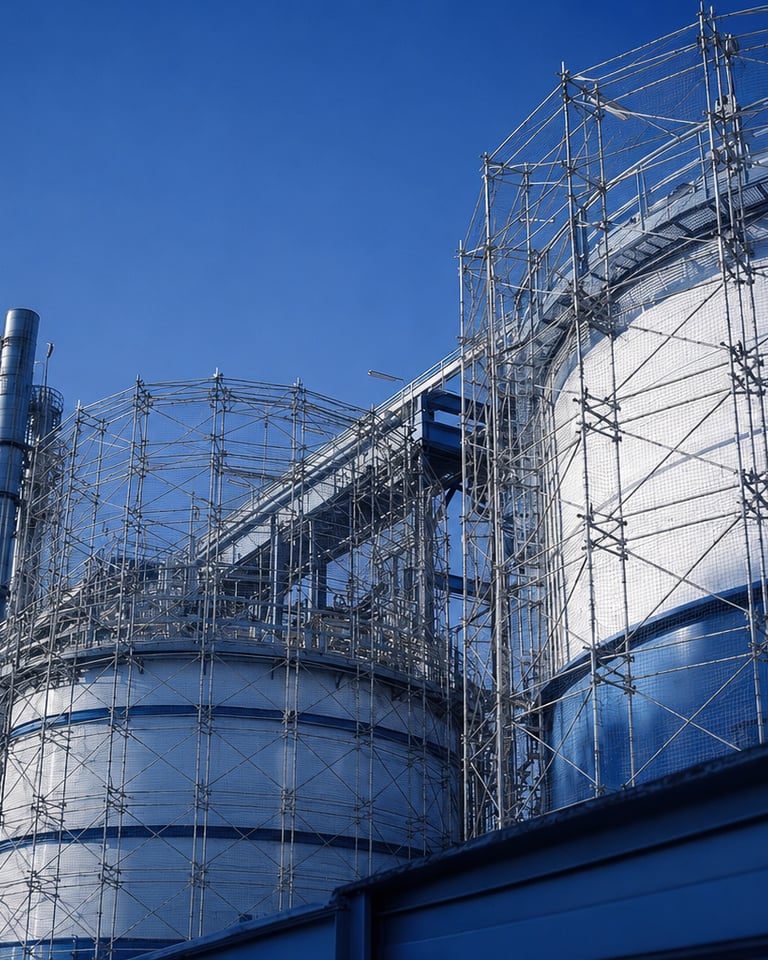
Modular Protective Engineering steel structural and proprietory net systems as well as anti-shrapnel panels provide an additional passive layer of physical protection for fuel storage tanks, petrochemical facilities, flammable material warehouses, gas infrastructure and other high-value industrial assets. Installed around or above exposed zones, the structures create a standoff barrier that helps reduce direct exposure to small, medium and large UAS threats, airborne ammunition and debris.
The system can be adapted to different site layouts and asset geometries, supporting perimeter, overhead or combined protection schemes. By complementing existing security measures, passive protection systems increase site resilience, limit potential damage and help maintain operational continuity for critical infrastructure facilities.
Guaranteed durability
The structural stability analysis considers the weight and speed of the UAV
Barrier
Durable modular structures create a significant barrier, stand off distance , provoking remote detonations of explosives or creating an entanglement capture layer that prevents explosion from taking place. This effectively protects the target from UAV threats, minimising the potential damage. Anti Shrapnel mats from anti inflamable material further safeguard facilities from shrapnel damage, following the explosion.
Flexibility
The passive protection construction can be adapted to different site layouts and infrastructure requirements. Our in-house engineering department performs all necessary calculations
efficiency
We offer prompt calculations for the required passive protection designs, and delivery within a few weeks.
Operating Principle:
CONTROLLED IMPACT ABSORPTION
The protective mesh is engineered to deform under impact and transfer loads through the tensioning system into the support frame. This helps reduce direct contact with the protected asset and limits the potential effect of UAV-related threats.
Configuration, cell size, tension level and anchoring are selected according to the protected object, site layout and expected threat parameters.